
Visiting the Prophet's Mosque
History, etiquette, accessibility, and a separate guide to visiting the Rawdah
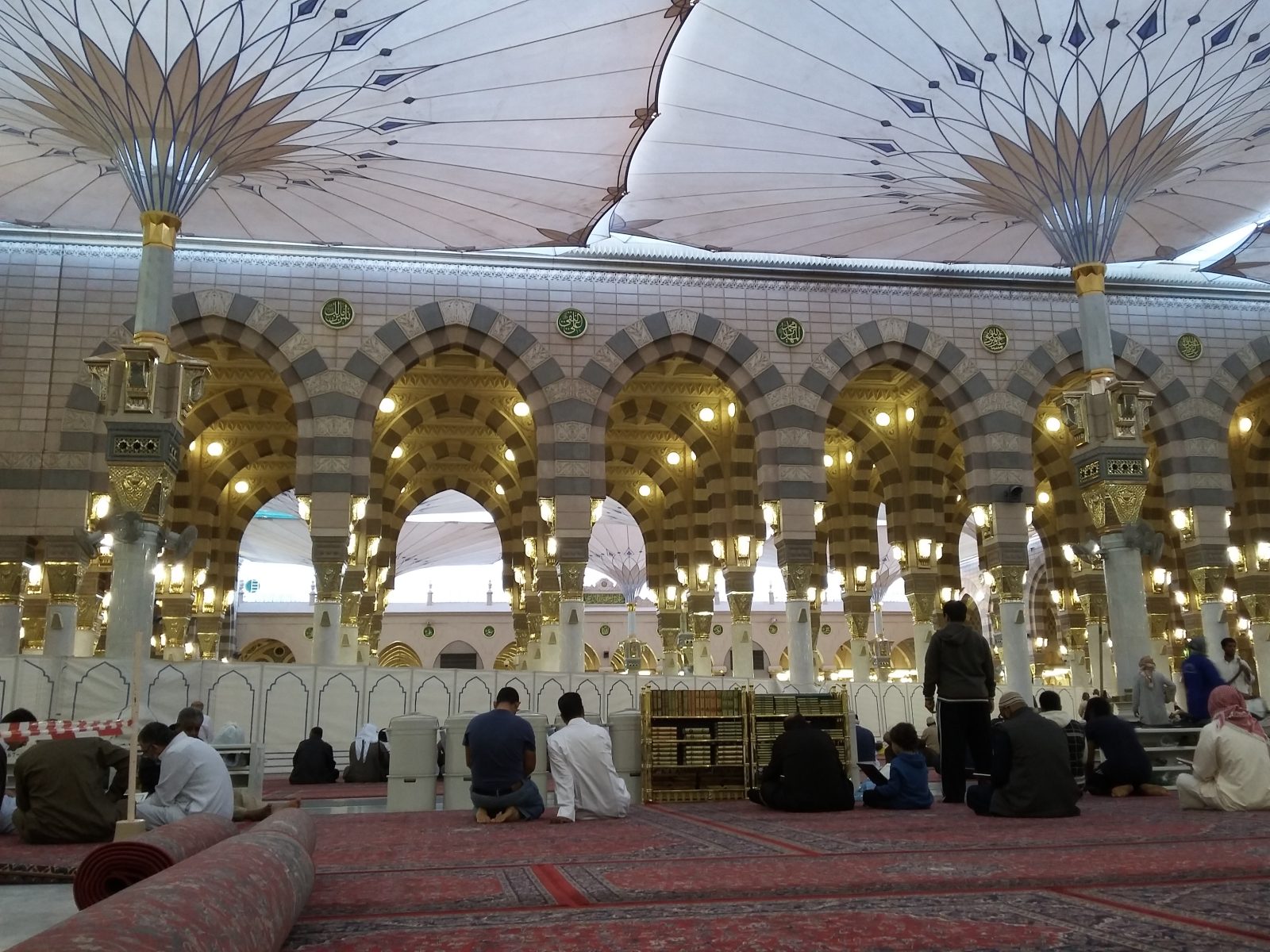
Al-Masjid an-Nabawi (the Prophet's Mosque) is the mosque founded by the Prophet Muhammad in Madinah, and the site of his burial. This guide covers its history, etiquette for visitors, and accessibility — and includes a clearly separated section on the Rawdah, a specific area inside the mosque that currently requires its own booking through the Nusuk app, distinct from general mosque entry. It doesn't repeat the city-level history already covered on the Madinah city guide — see that page for the broader picture.
History and expansion
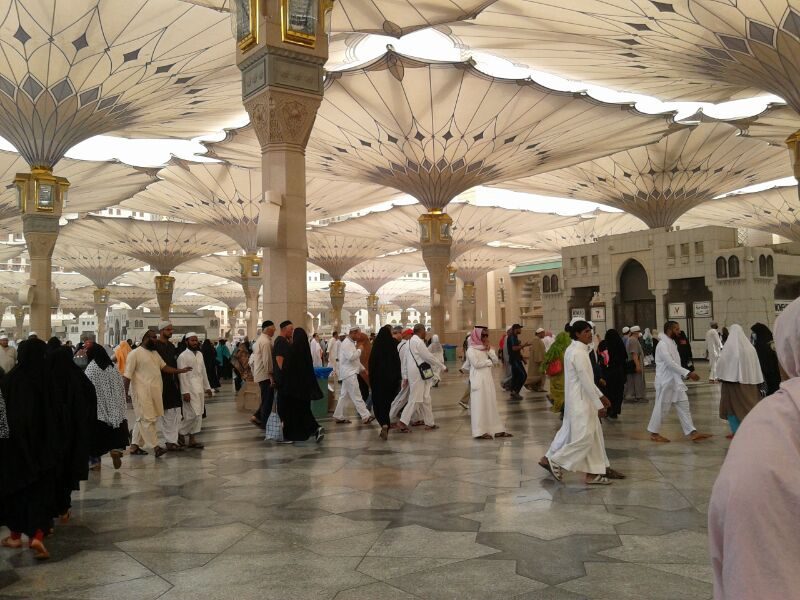
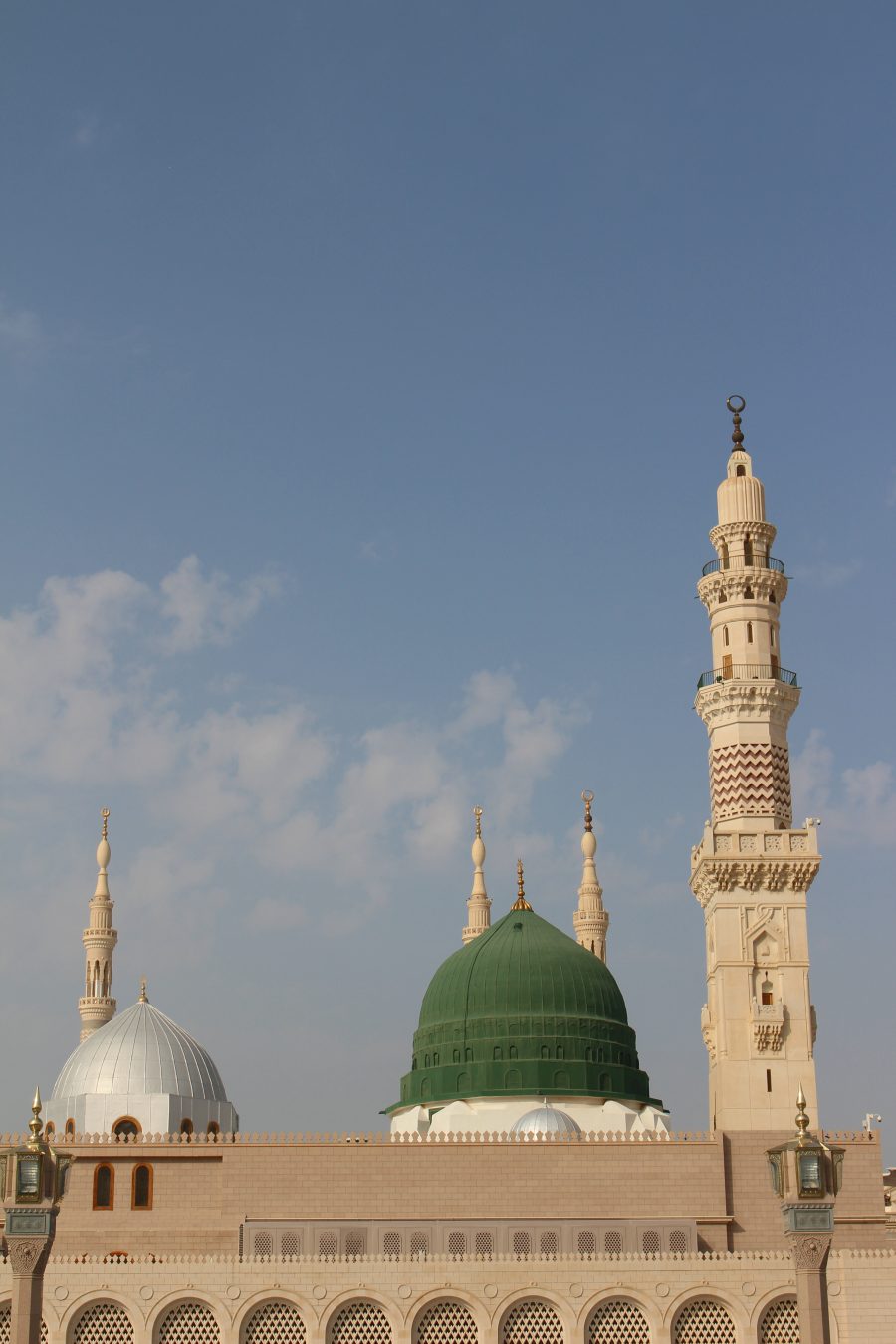
The mosque began as a simple structure the Prophet Muhammad built after arriving in Madinah in 622 CE, and grew through Rashidun, Umayyad, Abbasid, Ottoman and Saudi-era expansions into today's complex, reported to cover around 160,000 m² with capacity for roughly one million worshippers and 10 minarets around 105 m tall. Its most recognisable feature, the Green Dome above the Prophet's burial chamber, was built in wood in 1279, rebuilt in stone in 1476, and documented as having been painted green in 1837 — the colour is a historical addition, not part of the mosque's original construction. The courtyard's 250 retractable umbrellas, installed in 2010, shade worshippers during the day and fold back at night; the historic Ottoman prayer hall also has sliding domes on tracks that open to let in light and air when weather permits.
Religious significance
The mosque contains the Prophet Muhammad's burial chamber, beneath the Green Dome. Islamic tradition holds that prayer here carries special merit; as with any such belief, this page states it as a matter of religious tradition rather than a documented historical fact. Many Muslims combine a visit to the mosque with ziyarah — a devotional, non-obligatory visit — as covered in more general terms on the Madinah city guide.
The Rawdah: what it is, and how booking currently works
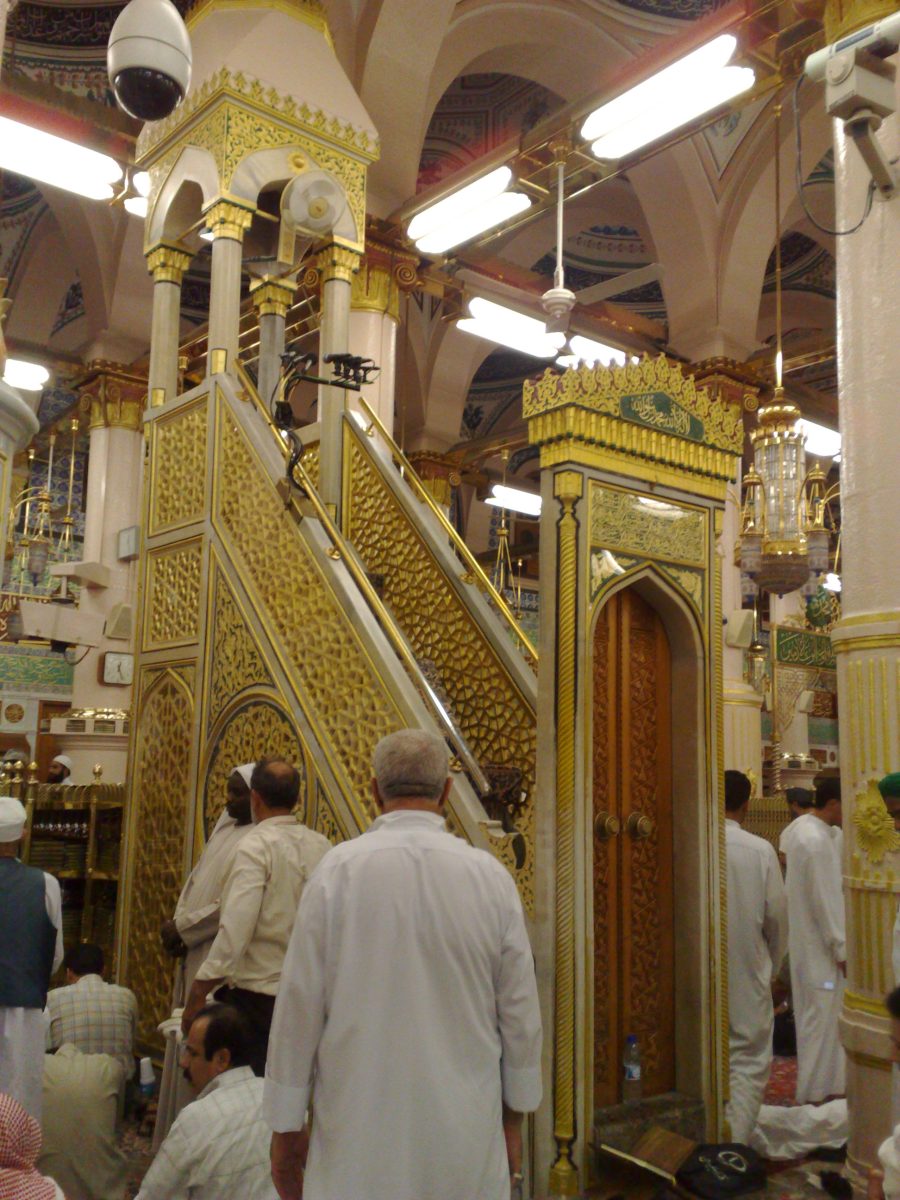
The Rawdah (Riyad al-Jannah) is a specific area inside the mosque, between the Prophet's former house — now his burial chamber — and his minbar. Islamic tradition describes it as one of the "gardens of Paradise." It is physically distinct from the rest of the mosque: entry is time-limited and currently managed separately from general mosque access.
Current booking mechanism — as of this page's last verification date, entry to the Rawdah requires a permit booked through the official Nusuk app (the Ministry of Hajj and Umrah's platform, which replaced an earlier app called Eatmarna). Booking is managed separately for men and women. Beyond that, this page deliberately does not state exact figures for how many days in advance slots open, how long a visit lasts, or whether there is an annual limit per person — sources on these specifics vary and none could be confirmed against a primary government document at the time of research. Always check the Nusuk app or site directly for current Rawdah booking availability and rules before you travel — the process has changed before and may change again.
Etiquette
Dress modestly, keep phones silent, and avoid loud prayer or recitation that disturbs others — this applies throughout the mosque and especially in the Rawdah, where visit times are limited and shared with many other visitors. General mosque etiquette (quiet, respectful behaviour, no eating or drinking inside) applies as it would at any mosque.
Accessibility
Wheelchair ramps and lifts are available at several gates, with staff on hand to help direct visitors with mobility needs — ask at any gate on arrival. Separate gates are designated for men's and women's entry and prayer areas; check current signage or ask staff, since gate assignments can be adjusted for crowd management, especially during Ramadan and Hajj season.
Orientation: notable gates
Among the mosque's many gates, a few are commonly referenced by name: Bab as-Salam (Gate of Peace) on the western side is historically significant and among the most well-known; Bab Jibril (Gate of Gabriel) is on the eastern side. The Green Dome is the easiest landmark to orient by from a distance.
Frequently asked questions
What is the Rawdah, and is visiting it required?
The Rawdah is a specific area inside the mosque that Islamic tradition holds to be especially blessed. Visiting it is a devotional practice, not an obligatory rite — you can visit Al-Masjid an-Nabawi and perform ziyarah without entering the Rawdah specifically.
How do I book a Rawdah visit?
At the time of this page's last verification, entry requires a permit booked through the official Nusuk app, managed separately for men and women. Booking details (how far in advance, visit duration, any limits) can change — check the Nusuk app or site directly before you travel rather than relying on this page for current specifics.
Does booking a hotel include a Rawdah visit or permit?
No. A hotel booking, including any made through TravelPack, does not include or guarantee a Rawdah appointment, a Hajj/Umrah permit, or a visa. The Rawdah permit is booked separately and directly through the Nusuk app.
Is entry to the Rawdah separated by gender?
Yes — booking and visit sessions are managed separately for men and women.
Sources & further reading
- Nusuk — official Ministry of Hajj & Umrah platform
- Wikipedia — Al-Masjid an-Nabawi
- Wikipedia — Nusuk (platform history, Rawdah booking as a listed feature)
Content verified: 2026-09-23