
Makkah: A Guide to Islam's Holiest City
History, religious significance, geography and practical visitor information
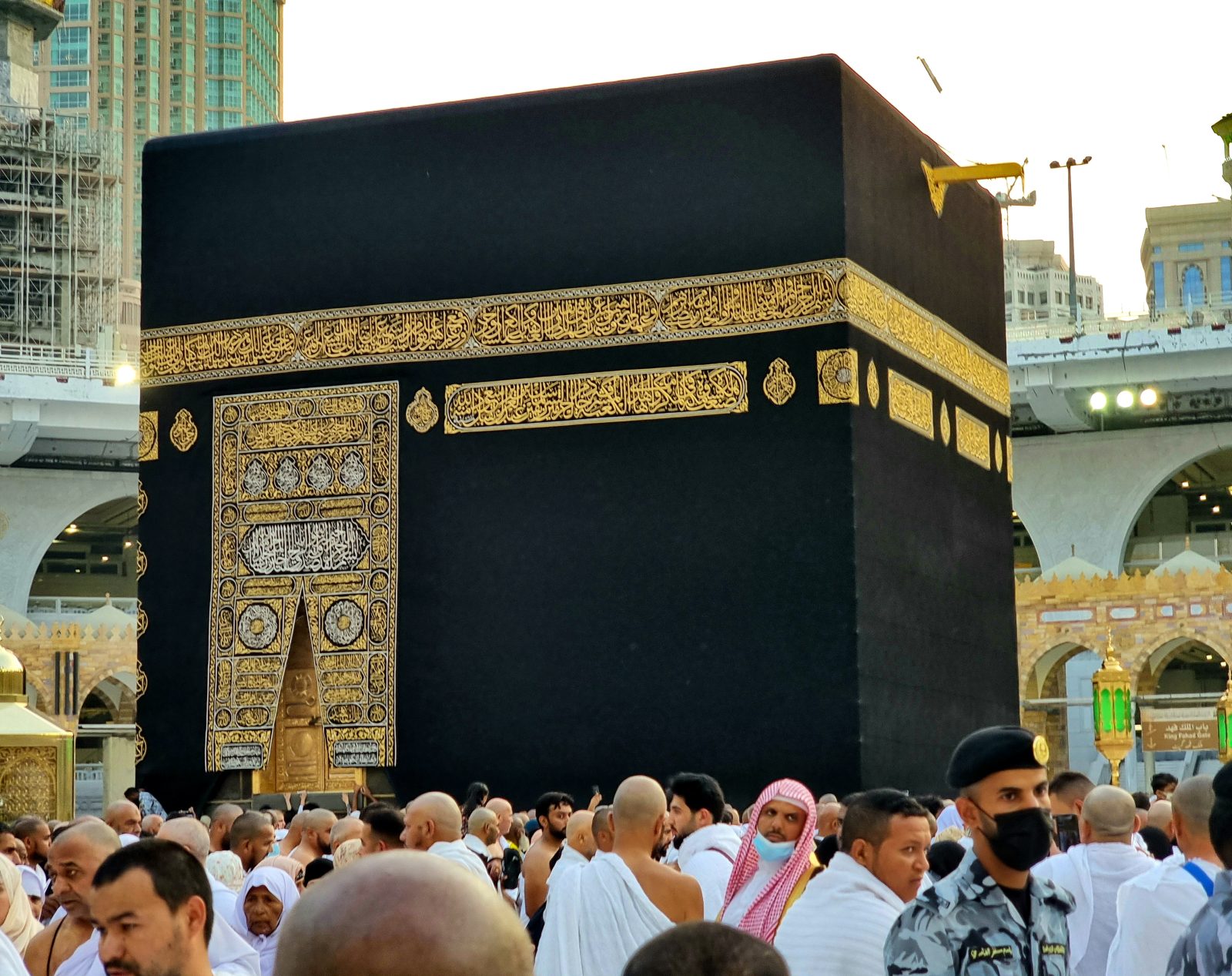
Makkah (also spelled Mecca) is the holiest city in Islam, the birthplace of the Prophet Muhammad and the location of the Kaaba, the structure toward which Muslims worldwide face in prayer. It lies in the Hejaz region of western Saudi Arabia and is the destination of the annual Hajj pilgrimage and of Umrah, which can be performed year-round.
Where Makkah is
Makkah sits in a narrow valley in the Hejaz region of western Saudi Arabia, about 70 km inland from the Red Sea port city of Jeddah, at roughly 277 m elevation. As of the 2022 Saudi census it is the country's third-largest metropolitan area, with a metro population of about 2.4 million — a figure that multiplies many times over during Hajj and Ramadan.
| Quick facts | |
|---|---|
| Region | Makkah Province, Hejaz, Saudi Arabia |
| Elevation | ≈ 277 m above sea level |
| Distance from Jeddah (nearest airport) | ≈ 70 km |
| Distance from Madinah | ≈ 340–400 km by road, depending on route |
| Metro population (2022 census) | ≈ 2.4 million |
Why Makkah is sacred
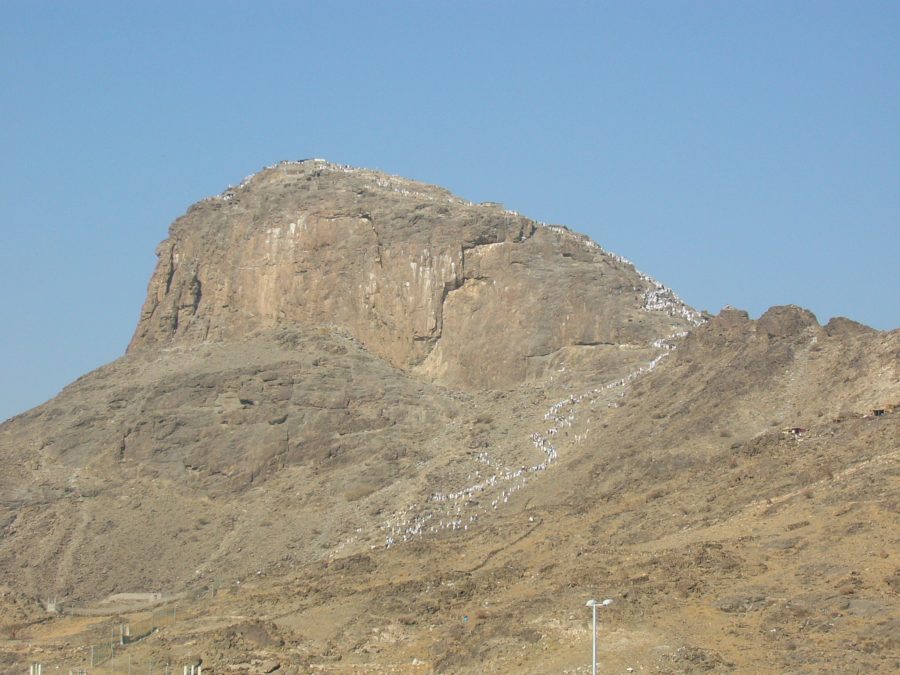
At the centre of Masjid al-Haram (the Grand Mosque) stands the Kaaba, a cuboid stone structure that is the qibla — the direction all Muslims face during the five daily prayers, wherever they are in the world. According to Islamic tradition, the Kaaba was built, or rebuilt, by the prophets Ibrahim (Abraham) and his son Ismail (Ishmael); this is a matter of religious belief rather than a claim that can be independently verified historically. Near the Kaaba are the Black Stone set into its eastern corner, the Maqam Ibrahim, and the Zamzam Well. Makkah is also the birthplace of the Prophet Muhammad (born c. 570 CE) and the place where, according to Islamic tradition, he received the first revelations of the Quran at the Cave of Hira on nearby Jabal al-Nour in 610 CE.
A brief history of Makkah
Makkah's documented history centres on the growth of Masjid al-Haram around the Kaaba. The mosque was enclosed with a wall under the caliph Umar in the mid-7th century and has been expanded repeatedly since — most substantially under the Abbasids in the 8th century, the Ottomans in the 17th century, and the Saudi state from the 1950s onward. The city changed political hands several times over the centuries — including Umayyad, Abbasid, and Ottoman rule — before its incorporation into the Kingdom of Saudi Arabia in 1924/1925. This is a summary timeline; treat single-source figures (attendance, capacity) as approximate unless a current official source is cited.

| Period | Event |
|---|---|
| c. 570 CE | Traditional birth date of the Prophet Muhammad in Makkah. |
| 610 CE | According to Islamic tradition, the first Quranic revelation at the Cave of Hira, Jabal al-Nour. |
| 622 CE | The Prophet Muhammad and his followers emigrate to Madinah (the Hijrah). |
| c. 630 CE | Makkah comes under Muslim rule; the Kaaba is rededicated to the worship of God alone. |
| Mid-7th century | Caliph Umar has the first enclosing wall built around the Kaaba, founding Masjid al-Haram as a defined mosque. |
| 8th century | Abbasid caliphs al-Mahdi and al-Hadi carry out the largest expansion of the mosque before the Saudi era. |
| 1517–1917 | Makkah is administered under Ottoman suzerainty, with periodic local Sharifian rule. |
| 1924/1925 | Makkah is incorporated into what becomes the Kingdom of Saudi Arabia (1932). |
| 1950s–present | Successive large-scale Saudi expansions of Masjid al-Haram to accommodate growing numbers of pilgrims. |
Getting to and around Makkah
Makkah has no international airport of its own; most visitors fly into King Abdulaziz International Airport in Jeddah (about 70 km away), which has a dedicated Hajj terminal, or into Taif. The Haramain High-Speed Rail connects Jeddah, Makkah and Madinah. Within the city, taxis, ride-hailing apps and shuttle buses serve hotels and the Haram area; during Hajj and peak Ramadan periods, road access is tightly managed and many streets around the Haram are pedestrian-only.
Orientation: Makkah's districts
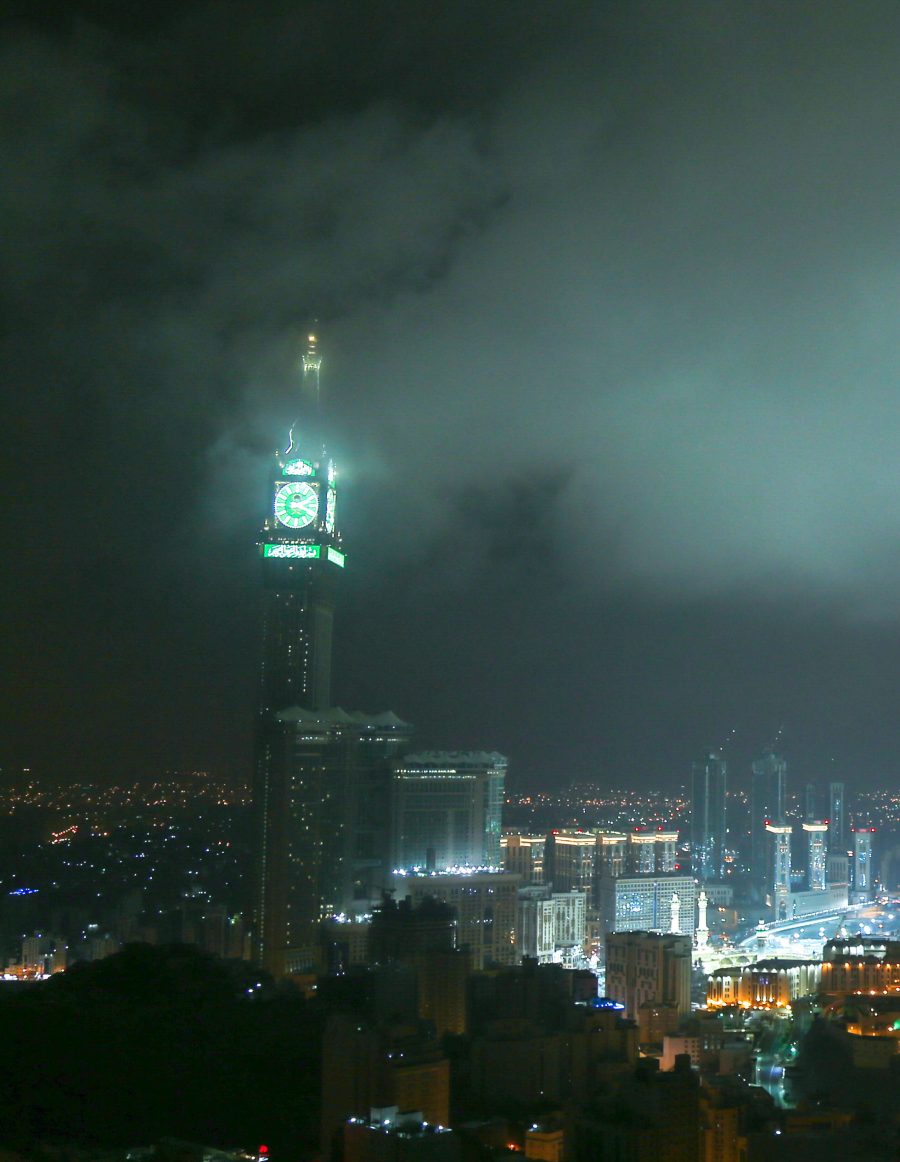
Most visitor activity is centred on the districts immediately around Masjid al-Haram: Ajyad and Misfalah to the south, closest to the mosque, and Aziziyah a few kilometres further out, connected to the centre by shuttle buses — a more budget-friendly base. The Abraj Al Bait complex, with its landmark clock tower, sits directly beside the Haram and houses several hotels with a direct view of the Kaaba.
Frequently asked questions
Can non-Muslims visit Makkah?
No. Under Saudi law, non-Muslims are not permitted to enter the city of Makkah at all — this is enforced at checkpoints on every road into the city. This restriction applies only to the city of Makkah itself, not to Jeddah or the rest of Saudi Arabia.
What is the difference between visiting for Hajj, Umrah, or neither?
Hajj is a specific, dated annual pilgrimage that is obligatory for able Muslims once in a lifetime. Umrah is a shorter pilgrimage that can be performed at any time of year. Entry to Makkah itself is restricted to Muslims regardless of whether a formal pilgrimage is being performed.
What is the nearest airport to Makkah?
King Abdulaziz International Airport in Jeddah, roughly 70 km away, is the main gateway and has a dedicated Hajj Terminal. Taif International Airport is a secondary option.
When is the best time to visit?
That depends on your purpose: Hajj occurs on fixed dates in the Islamic calendar that shift each Gregorian year; Ramadan is a particularly busy period for Umrah; outside of these peak seasons, Makkah is generally quieter and hotel availability is easier.
Sources & further reading
- Nusuk — Makkah city guide (official Ministry of Hajj & Umrah platform)
- Wikipedia — Mecca
- Wikipedia — Masjid al-Haram
- Wikipedia — Jabal al-Nour
Content verified: 2026-09-23